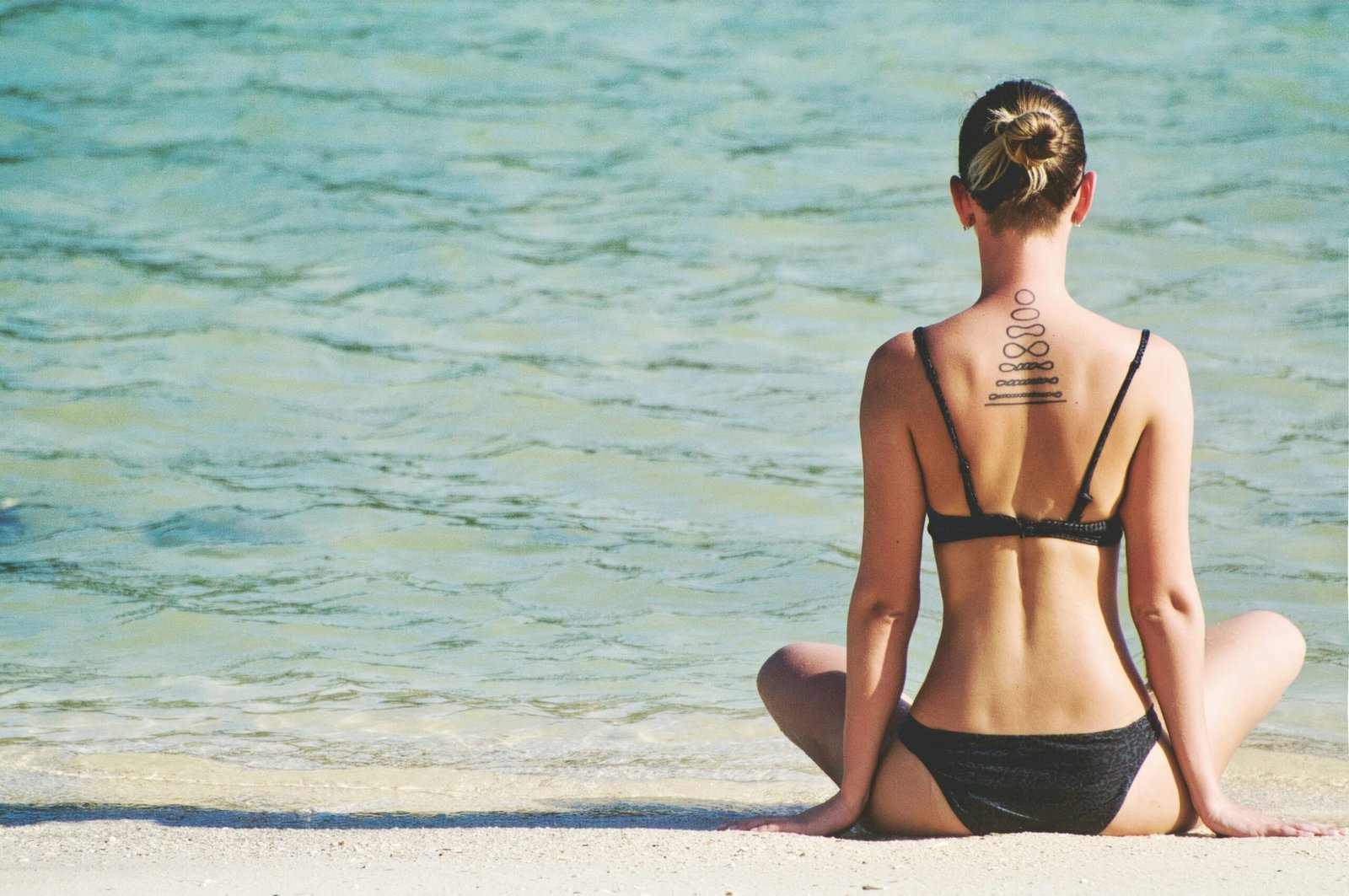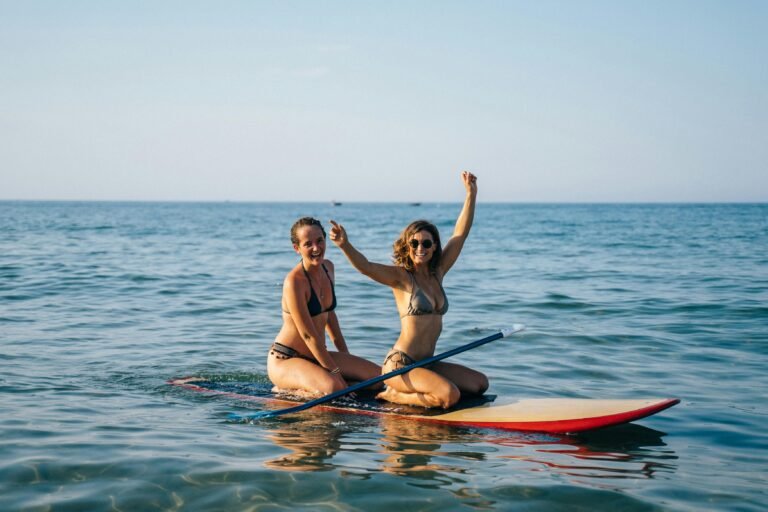
Let paddleboarding be the water sport you master this year. This is your summer. It’s time to try something new, get really good at it, and have an epic summer that you’ll remember forever. Get ready to kick back with friends, explore new lakes and waterways, and tone your body with paddleboarding.
Disclosure: As an Amazon Associate, I earn from qualifying purchases. Assume any links on this website are affiliate links with companies or products that I use and trust. I may earn a small commission at no cost to you, I just enjoy sharing my favorite finds with my readers!
What is Paddleboarding?
Paddleboarding, or SUP (Stand Up Paddleboarding), is an increasingly popular water sport that involves balancing yourself on a large board while you paddle your way through lakes, rivers, or even the ocean. While early versions of paddleboarding originated thousands of years ago, paddleboarding’s modern roots began in Hawaii in the 1940s. Surfers in Hawaii started using oars with their surfboards to teach tourists how to surf.
In the 1990s, Paddleboarding became a variation of surfing that lets anyone learn, regardless of their age or ability. Soon, paddleboarding was recognized as a sport and has gained interest ever since.
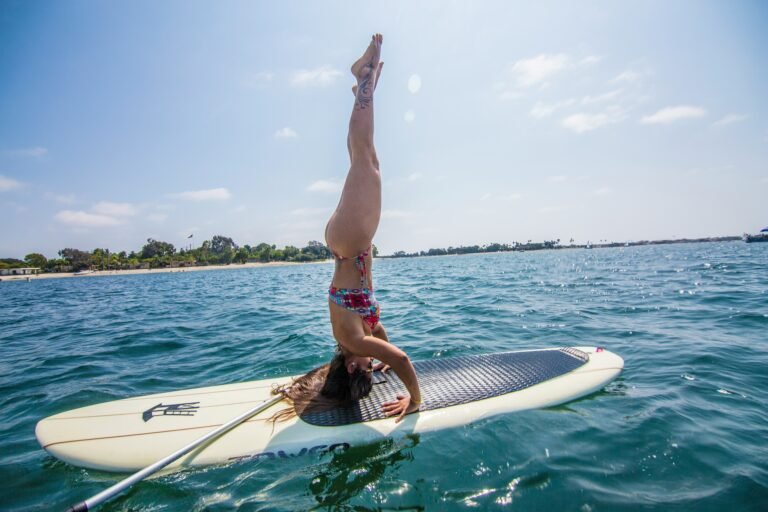
Paddleboarding is usually for calmer waters where you get a first-hand look at your surroundings by sitting, kneeling, or standing. As you get better at paddleboarding and steadier on the water, you can progress to practicing yoga on a paddleboard, enjoy surfing and touring, and have more than 1 person (or a pet!) on the paddleboard at a time.
Is Paddleboarding Hard?
No, I would not say that paddleboarding is hard. It’s all about balancing yourself and finding the right spot to plant your feet. However, it can be very tricky getting on the paddleboard, turning, and dealing with waves (even slight) as a beginner.
It does take some getting used to and some practice to get comfortable on a paddleboard. A little time and effort, and you’ll be out there living your best life! Here are a few SUP tips:
- Begin On Your Knees. Get onto the paddleboard and get comfortable on your knees before you get to standing up.
- Slowly Stand Up. Steady your feet at the center of the paddleboard.
- Keep Your Legs Strong. A slight bend is perfect.
- Plant Your Feet. No need to move them, dig them in.
- Engage Your Core. The core is essential for balance!
- Keep Your Gaze Ahead. Turning too much or looking down will make you lose balance and fall off!
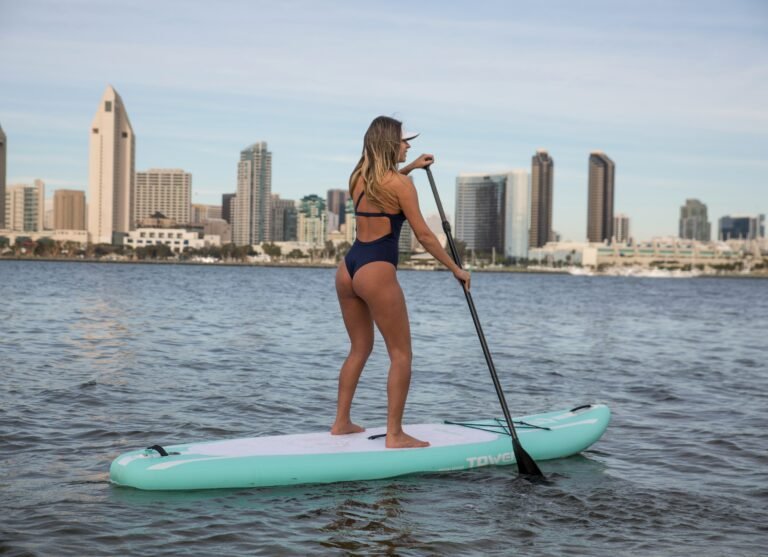
- Grip the Paddle Correctly. There are grooves on the top of the handle for you to hold with your top hand. The other hand is extended to a comfortable spot.
- Get Used to Paddling. Just practice paddling slowly in an open space for a while.
** Make sure to jump away from your paddleboard if you fall off. If not, you will hit the paddleboard, or it can hit you, and it doesn’t feel great!
** Also, make sure that you have the leash connecting your ankle to the board (paddleboards usually come with a leash with velcro to easily attach to your ankle)
Is Paddleboarding a Good Workout?
Paddleboarding is an EXCELLENT workout! Using your core and legs to keep your balance is an amazing way to spend your day out on the water! You’ll tone up real quick. Your arms and back are also engaged while paddling, burning calories overall and improving your cardiovascular health at the same time. This is a full-body workout while enjoying the sights and the sunshine!
Many people enjoy paddleboarding for its low-impact workout paired with the peaceful setting and slow, steady motion. It’s great for stress relief and can be quite relaxing. Some people travel several miles a day around lakes and rivers for their daily workout and zen time. Being a great full-body workout, it will also help you sleep well at night.
Just be aware – you may get more of a workout than you bargained for if the wind turns! It can be hard to paddleboard against the wind. I’ve been there, and it’s no joke – it will take twice the effort to get back against the wind as opposed to the easy breeze pushing you out when you started!
Paddleboarding VS Kayaking
Paddleboarding and kayaking are both great water sports that engage many muscles and give you a peaceful time out on the water. It’s all about preference of which you like better, and there’s no reason you can’t love and enjoy both!
When we set up at the lake for the day, we bring both our paddleboard and kayaks. They are fun in different ways, and useful to us and our kids for exploring the lake and taking in some beautiful sights (I’m always looking for turtles!)
Pros of Kayaks:
- More stability compared to paddleboarding
- Faster movement, covers more area of travel in a shorter time
- Super easy, even for beginners, since you are mainly just paddling and not worrying as much about balance
- Easier to maneuver in windy & wavy conditions
- Improves your balance and core, engaging more muscle groups than kayaking
- Different perspectives on the water and surroundings – you can sit down, kneel, and stand on a paddleboard
- Paddleboards are long, solid boards, virtually impossible to sink – unlike a sit-in kayak, which has a hollow cockpit
- There are different uses for paddleboards like SUP yoga, surfing, a floating platform for an even tan, touring, and even white water paddleboarding
Benefits of Paddleboarding
Paddleboarding isn’t only a great full-body workout for a rockin summer bod, but it’s also just a great way to spend a day! Relax and unwind and enjoy the mental health benefits of paddleboarding out in the sunshine. Paddleboarding can be done solo or alongside friends. Tell a friend to bring their paddleboard or kayak, and boom. You have a river buddy to explore with, plus enjoy all these great benefits of paddleboarding:
- Fantastic Full-Body Exercise
- Great for Toning Your Arms, Legs, and Core Muscles
- Improves Mental Health
- Improves Sleep
- Improves Cardiovascular Health
- Low Impact, Great for a Variety of People and Abilities
- Effective Activity to Lose Weight
- Enjoy Some Vitamin D and Sunshine
- Progressively Learn New Ways to Use the Paddleboard
What Size Paddleboard Do I Need?
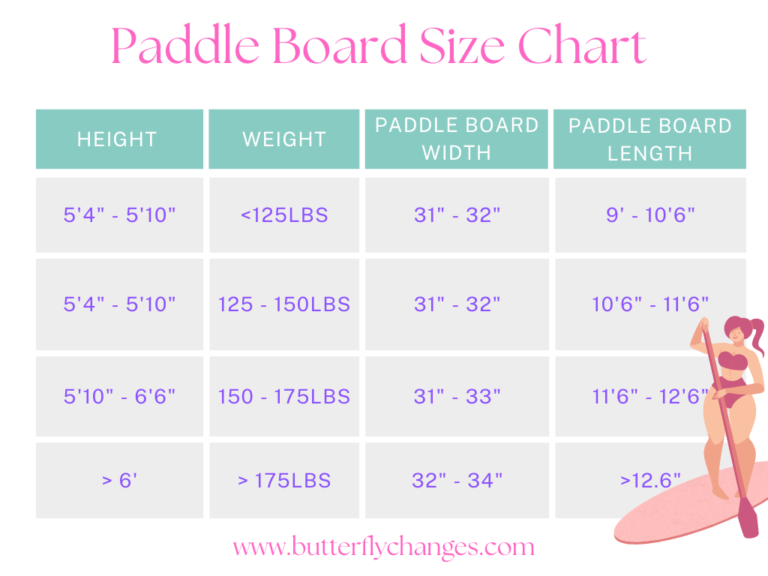
Paddleboards are generally around 10 or 11 feet long and between 32-34 inches wide, but can come in sizes ranging from 9-12 feet long and 30 to 35 inches wide.
What you really need to know, though, is what size paddleboard is right for your height and weight, in addition to what you plan on doing with your paddleboard and how you intend to use it.
Let’s start with what you want to use your paddleboard for.
- Experienced paddleboarders looking for speed and adventure, getting in and out of tight spots and exploring all kinds of narrow waterways – and eventually getting up to SUP Surfing should look for a paddleboard that is shorter and narrower. This type of board is more equipped to handle twists and turns, and swift maneuvers.
SIZE: 8′-10′ Long, 28″-30″ Wide
2. If you are looking to learn paddleboarding as a leisure activity in calm waters, try some SUP Yoga, and have nice stability and maneuverability, a mid-sized paddleboard is perfect for you. It offers a comfortable platform for various activities and is versatile enough for beginners and seasoned paddleboarders.
SIZE: 10′-12′ Long, 30″-32″ Wide
3. Those of you looking to travel longer stretches in calm waters, take part in some fishing, and travel with a pet or child on your board, a wider and longer paddleboard is the way to go. These are the most stable paddleboards due to their overall surface space and are excellent for balance and control.
SIZE: 12′-14′ Long, 32″-34″ Wide
Now Let’s Look at Height & Weight Sizing for Paddleboards
Your height and weight determine your center of gravity, which in turn will help to determine the ideal paddleboard for your stature. These are approximate measurements, but useful in finding the range that will give you the best stability and ease of use for your size.
Best SUP for Beginners
Now that you have a better idea of what size paddleboard will serve you best based on your height, weight, and planned activities, the fun starts! Shopping for a paddleboard is fun because now you get to explore what colors and design you want in a paddleboard and what different boards come with in terms of accessories.
Here are a few of the absolute BEST Stand-up Paddleboards for Beginners. These all blow up super fast, are lightweight, and come in different sizes.
ROC Inflatable Stand Up Paddleboard with Paddle Board Accessories – This is an ideal SUP for beginners, as ROC is a top-rated paddleboard company based in the United States. They are known for having well-crafted and super sturdy boards, with cool colors and designs. This inflatable SUP comes with your paddle, your safety leash, a detachable fin, a dual-action pump, a storage backpack for the deflated board, and even a waterproof dry bag that will come in handy on your travels.
This is another ROC Inflatable Stand Up Paddleboard that is the perfect size and style for most beginners. This one comes with all of the same accessories as the last one, plus a kayak seat! It’s optional to use, but great to have! It’s a durable and sturdy board – rock hard once blown up and great for SUP yoga and tanning. It’s just like the one I have and I LOVE it!
This Skatinger Super Wide Inflatable Stand Up Paddleboard is an excellent option for paddleboarders looking to bring an extra person on their board. This one is wider and longer than the other two, and also has a higher weight limit of 450 lbs.
Here is another great option – the SereneLife Inflatable Stand Up Paddleboard you can’t go wrong with. It’s a great size, it paddles well, and glides through the water effortlessly.
Life Vest for Paddleboarding
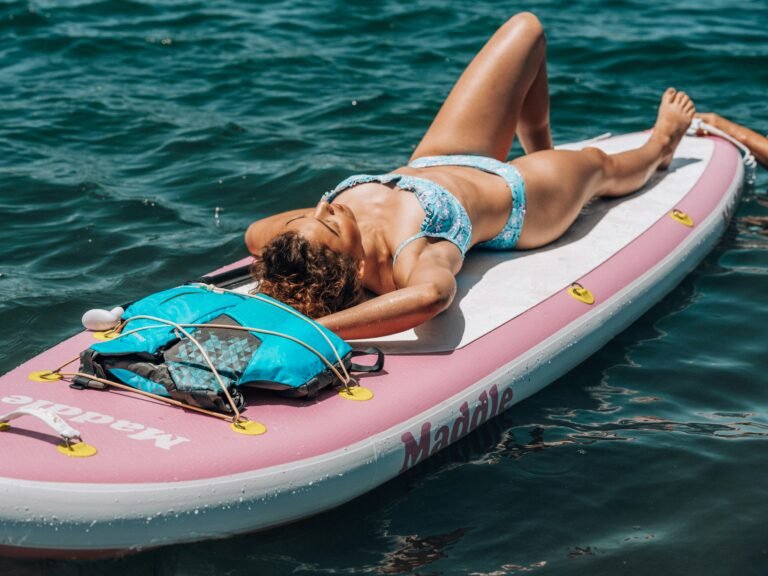
If you are seeking a life vest for paddleboarding, be sure it’s one that you can easily move with. You will be repetitively moving your arms to paddle, and larger life vests can get in the way, scratch under your arms, or just be overall uncomfortable.
Here are a couple of great options for a life vest for paddleboarding:
The Onyx MoveVent Dynamic Paddle Sports CGA Life Vest is the go-to for many water sport enthusiasts with its unrestrictive movement design, feeling less bulky than other life vests. It has a strong and durable zipper, a partially mesh back for seats, zippered pockets, and even an attached safety whistle.
A great option for more confident swimmers is an Onyx Unisex Belt Pack. It’s an inflatable life jacket that you wear around your waist until you need it. This way you have something with you and you can inflate it in just a few seconds.
If you’re planning to paddleboard with your pup, make sure they are all set in their Shark Dog Life Jacket, too!
Shoes for Paddleboarding
While paddleboarding can absolutely be done barefoot, shoes can be a nice treat for learning to steady and balance yourself. Paddleboards have a great non-slip deck that works well with water shoes for grip and peace of mind. They are also inexpensive and great to have for rocky shores.
Check out these SEEKWAY Water Shoes. Made of rubber and spandex, they are breathable, quick-dry, comfortable, and have a great grip. Plus, they come in a ton of colors!
The Racqua Water Shoes are ideal for water sports – you feel like you have bare feet, but they are protecting you the whole time. They are super lightweight and have great traction – perfect shoes for paddleboarding!
These Vifuur Water Sport Shoes are essentially socks with rubber bottoms. Great for practicing yoga on your paddleboard!
Best Places to Paddleboard
For most paddleboarding, the best places to go are calm waters. Especially for beginners, calm waters are important for learning your center of balance and practicing your stance on the paddleboard.
Lakes are ideal places for paddleboarding. Rivers and other waterways work well too, and even parts of the ocean if it’s calm. I have gone paddleboarding in lakes and in the ocean. (Hollywood, Florida, has surprisingly calm waters!) Aruba would also be a great place for paddleboarding, as we were just in the Palm Beach area of Aruba, and the water was very calm.
Besides calm waters, the main “best places” to paddleboard more depend on your comfort level, surroundings, and weather. Windy days are not very fun to paddleboard in, as you are more susceptible to the wind while standing on the board and more likely to fall or overexert yourself trying to get back to shore if the wind is against you.
As far as comfort level – if you’re a beginner, try renting a paddleboard while on vacation to see if you like it. If you have a paddleboard or just want to go for it, you may want to start out on a quiet lake or hidden spot with a friend if you get embarrassed easily, because chances are that you will fall off a few times before you get the hang of it!
In terms of finding the best surroundings for where you’d like to paddleboard, make sure there’s enough area to cover and keep you intrigued. Search for turtles and birds while you paddleboard, make sure there aren’t boats near you causing waves, and come in before the sun sets. Know your surroundings and how to get back to where you left from. Wear your life jacket and keep your phone in your dry bag in case of emergencies.
Enjoy Your EPIC Summer
Now, get out there and become a master paddleboarder! Don’t be afraid to try something new. Enjoy using your body, be present in the beautiful day around you, hear the sounds of the animals and nature, and soak up the quiet time with yourself or the fun time with friends. Paddleboarding can be enjoyed solo or with friends and family – however you want it to be! Just get your paddleboard, use this info as a guide, and have an absolutely epic summer, you deserve it!